
What Are Variations in a New Home Build — And How to Avoid Them Costing You Thousands
Every custom home build has variations. Some have a handful. Some have hundreds. The difference between a build that finishes on budget and one that blows out by $80K usually comes down to how variations are managed, not whether they happen at all.
If you’re about to sign a building contract, or you’re already mid-build and watching the cost creep up, this is the one part of the process worth understanding properly. Variations are where homeowners get hurt, and they’re the easiest thing in a build to lose track of.
Here’s what a variation actually is, what it really costs, the five main reasons they pile up, and what to ask your builder before you sign anything.

What Is a Variation?
A variation is any change to the building contract or plans after the contract is signed.
That’s it. If something is different from what’s in the original contract, different tap, different tile, different wall position, different appliance, different timber species, it’s a variation. Each one needs to be priced, written up, agreed to, and signed off before the work happens.
Some variations are tiny. Moving a powerpoint 300mm to the left. Swapping one tile for another at the same price. Some are big. Changing the kitchen layout after framing has gone up. Adding a deck that wasn’t in the original plan. Both follow the same paperwork process, just with very different price tags.
The contract you signed is the locked baseline. Everything else is a variation.
How Variation Orders Actually Work
A proper variation order is a written document. It needs to include:
- What’s changing: described clearly enough that there’s no confusion later
- The price: including labour, materials, and any builder margin
- The time impact: how many days this adds to the build program
- Both signatures: yours and the builder’s, before work starts
If your builder is doing a verbal “yeah, no worries, we’ll sort it out at the end”, that’s a problem. We’ll get to why in a minute.
The variation should be quoted and signed before the work happens. Not after. Once it’s done, your bargaining power is gone, you can’t exactly ask them to rip the wall back out if the price comes in higher than expected.
The Real Cost of Variations
Variations cost more than getting it right the first time. Always. Here’s why.
When something is in the original contract, it’s planned, scheduled, and priced as part of a coordinated job. Materials are ordered in bulk, trades are booked in sequence, nothing has to be undone.
A variation breaks that flow. The builder has to stop, re-quote, re-order, re-schedule, sometimes undo work that’s already done. That costs money, and the builder is going to charge you for it. Fairly, in most cases. But it adds up fast.
Typical variation costs in a Brisbane custom build:
- From $500 for something small, moving a powerpoint, changing a tap fitting, swapping a door handle
- From $2,000, $5,000 for a wall move or window relocation, depending on stage
- From $10,000+ for kitchen layout changes mid-build, ensuite reconfigurations, structural changes
- From $30,000, $80,000+ total variation spend on a poorly-managed custom build
That last number is the one that hurts. We’ve seen builds where the variation total ends up north of $100K because no one was tracking the running tally. Every change felt small at the time. They never do when you add them up.
There’s also a time cost. Variations don’t just add dollars, they add days. A two-week delay on framing pushes back every trade after it. That’s another two weeks of site costs, finance interest, and rent on your temporary place.
The 5 Main Causes of Variations
Variations come from five places. Understanding which one is biting you helps you stop it.
1. Design Changes (Client-Driven)
You see the kitchen taking shape and decide you want the island bigger. You walk through the framed bedrooms and realise the master is smaller than you thought. You change your mind on the bathroom tile.
These are the most common variations and the easiest to control, by spending more time in the design phase. Every change you make on paper is free. Every change you make on site costs thousands.
2. Scope Changes (Add-Ons)
You decide to add a butler’s pantry. A deck. A pool. Built-in joinery you weren’t going to do.
Sometimes these are genuinely good ideas. Sometimes they’re momentum decisions you’ll regret when the final invoice lands. Either way, they’re variations and they add up.
3. Site Surprises
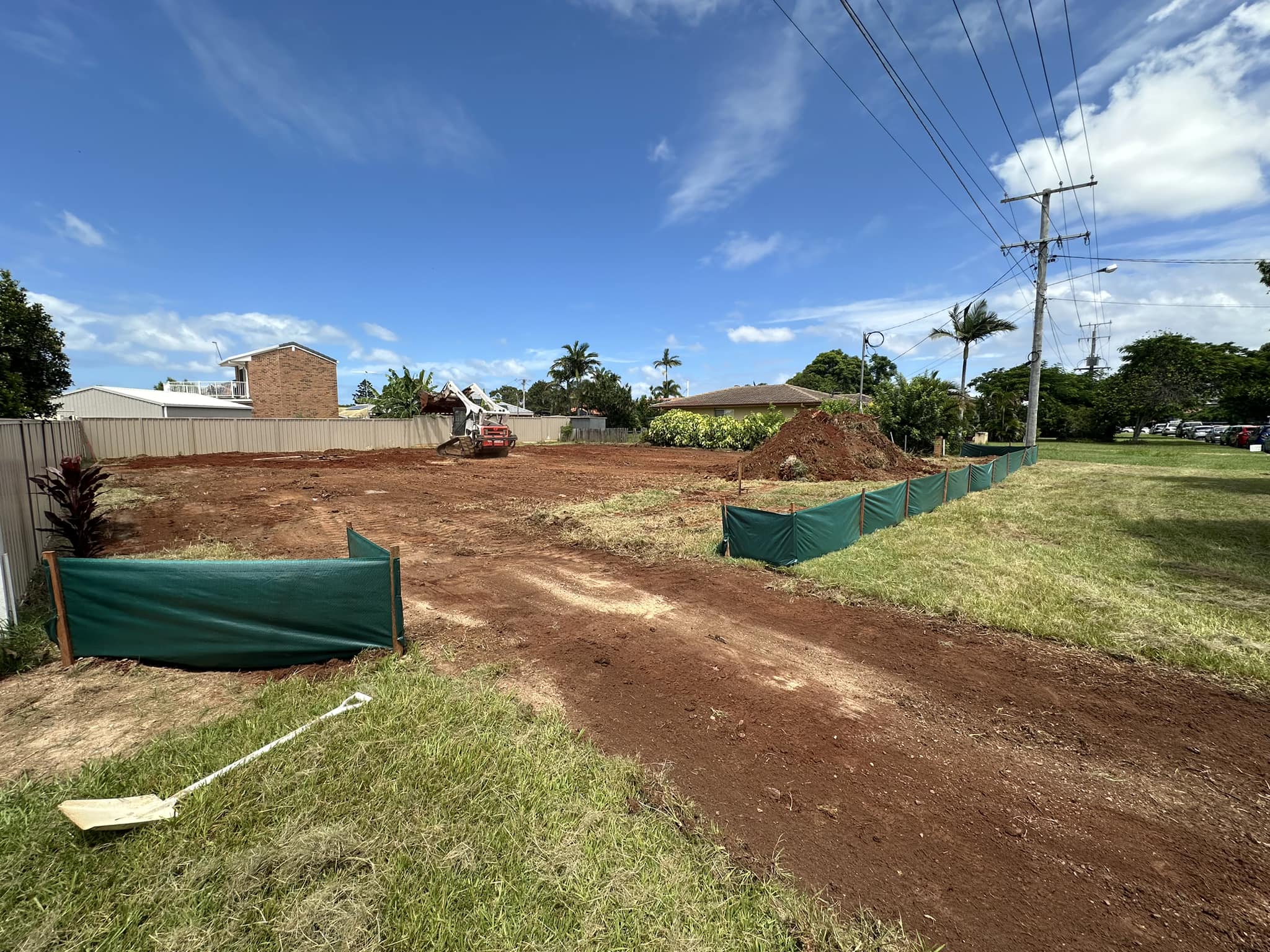
Rock under the slab. A drainage issue no one picked up. A neighbour’s tree root running through your build zone. Soil testing usually catches the big stuff, but Brisbane sites, especially anything with a slope or older infill, can throw curveballs.
These variations aren’t anyone’s fault, but they still cost money. A good builder will flag the realistic risk areas before you sign.
4. Builder Errors or Re-Work
A wall built in the wrong spot. A window installed where the door should go. A tradie pouring the wrong concrete mix.
These should never become a variation you pay for. If it’s the builder’s mistake, the builder fixes it. Watch your variation list for any item that smells like covering up an error.
5. Supplier Substitutions
The tap you specified is on a six-month back-order. The tile is discontinued. The benchtop colour has been changed by the manufacturer.
A good builder will find a like-for-like swap at no cost. A bad one will use it as an opportunity to upsell or quietly downgrade. This is one to watch closely.
Why Design-First Builds Rack Up More Variations
If you go to an architect or builder’s designer first, then take those plans out to builders to quote, you’re on what’s called a “design-first” or “tender” path.
It’s the traditional way of doing things, and it has a structural problem: the designer doesn’t price the build as they’re designing it. So you can end up with beautiful plans that are $200K over your budget, and the only way to bring them back is to start cutting features one variation at a time.
Even when the budget lines up, design-first builds tend to have more variations because:
- The designer doesn’t always specify everything (allowances and PC sums get used as placeholders)
- The builder doesn’t have detailed knowledge of every product choice
- Decisions get pushed downstream into the construction phase
The result is more “we’ll figure it out as we go”, which is variation territory.
How a Tight Design-and-Build Process Minimises Variations
Design-and-build (where one company handles both the design and the construction) doesn’t eliminate variations. Nothing does. But it cuts them down significantly because:
- The build cost is checked against the design at every step, not just at the end
- Specifications are locked down properly before contract signing
- The builder already knows what’s going in, so there are no surprises during construction
- Allowances and PC sums are used sparingly, with real prices wherever possible
The trade-off is you’re committing to one team for both phases. That’s why it matters who you pick.
For more on how this works step by step, see our guide on the building stages of a custom home.
What to Ask Your Builder About Variations BEFORE Signing
Before you sign the contract, ask these questions. Watch how they answer, the answer matters less than the comfort level.
- What’s your average variation total on a build like mine? A confident builder will give you a number. A vague answer is a red flag.
- What margin do you add to variations? Industry standard is 15-25% on top of cost. Some builders charge more. You want this in writing.
- How are variations approved? Look for a written process, quote, sign, then work starts. Not the other way around.
- Can I see a sample variation order? A real builder will have a template ready.
- What’s in the contract as a Provisional Sum or PC item? These are placeholders. Every one is a future variation waiting to happen. Fewer is better.
- What’s your contingency recommendation? A good answer is 5-10% of the contract value held back for the unexpected.
Red Flags, Builders Who Plan to Make Money From Variations
Some builders quote low to win the job, then make their margin back through variations. This is a known industry tactic. Here’s what it looks like:
- The original quote is suspiciously cheap compared to others you’ve received
- The contract is full of allowances and PC sums rather than firm prices
- The specification document is thin: finishes, fittings, and inclusions aren’t pinned down
- They’re vague about how variations are priced when you ask
- They downplay the design phase and want to start building fast
If you’re seeing two or three of these signs, walk away. The cheap quote will become an expensive build.
For a sense of what realistic numbers look like in this market, our breakdown of how much it costs to build a custom home in Brisbane has the actual ranges.
How to Protect Yourself
The short version of everything above:
- Spend more time in design. Every decision made on paper is free. Every decision made on site costs thousands.
- Lock the specification down. Brand, model, colour, finish, get it all in writing before contract.
- Hold a contingency. 5-10% of the build cost, sitting in your account, untouched until needed.
- Read the contract. Especially the variation clause and the schedule of allowances.
- Get a written variation process in place from day one, and stick to it. No verbal yes.
- Track the running total. Keep your own spreadsheet. Don’t wait for the final invoice to find out where you’ve landed.
If you’re considering a knockdown rebuild in Brisbane, variations matter even more, site surprises are more common when you’re working over an existing footprint.
FAQs
Are Variations Avoidable?
No, not entirely. Even on the most thoroughly planned build, something will come up, a product gets discontinued, a site surprise turns up, or you change your mind about something once you can walk through the framed rooms. The goal isn’t zero variations. It’s keeping them small, intentional, and properly priced.
What’s a Reasonable Variation Total on a Custom Build?
For a well-managed Brisbane custom build, expect somewhere between 2% and 5% of the contract value in variations. On a $1.5M build, that’s $30K, $75K. If you’re tracking higher than that, something is off, either the design wasn’t tight enough or someone is making changes that should have been caught earlier.
Do I Have to Accept a Variation?
No. A variation requires your written approval. If a builder pushes work through without your signature, that’s a contract breach and you don’t have to pay for it. The flip side is that if a site surprise genuinely needs fixing, refusing the variation can stop the build, so it’s a negotiation, not a flat veto.
What Does PC Sum Mean?
PC stands for Prime Cost. It’s a placeholder allowance for an item that hasn’t been specified yet, usually fixtures and fittings like tapware, appliances, or tiles. The contract carries a budget figure (say, $4,000 for the kitchen tapware), and the actual cost is reconciled later. If you spend more, it becomes a variation. The fewer PC sums in your contract, the fewer surprises.
What’s the Difference Between a Variation and a Provisional Sum?
A Provisional Sum is for work where the scope isn’t fully known at contract signing, like piering, where the soil report might say “around $15K” but the actual cost depends on what’s under the ground. A variation is a change to work that was already specified. Both end up adjusting your final bill, but they’re different mechanisms.
Can I Negotiate a Variation Price?
Yes, especially if it’s a substantial one. You’re entitled to ask for a breakdown of how the price was calculated, labour, materials, margin. If something looks high, get a second opinion before signing. Once you sign, the price is locked.
Talk to Us Before You Sign
Most of the variation pain we see comes from builds that weren’t planned tightly enough at the start. By the time the contract is signed, the cost trajectory is already set.
If you’re early in the process, even still deciding between builders, we’re happy to walk you through what a properly locked-down design-and-build looks like, and what to watch for in any contract you’re being asked to sign.
Get in touch and we’ll have a straight conversation about your project.

Our Services
Get A Quote
Get in touch today for a free, no-obligation quote on your building project.


