
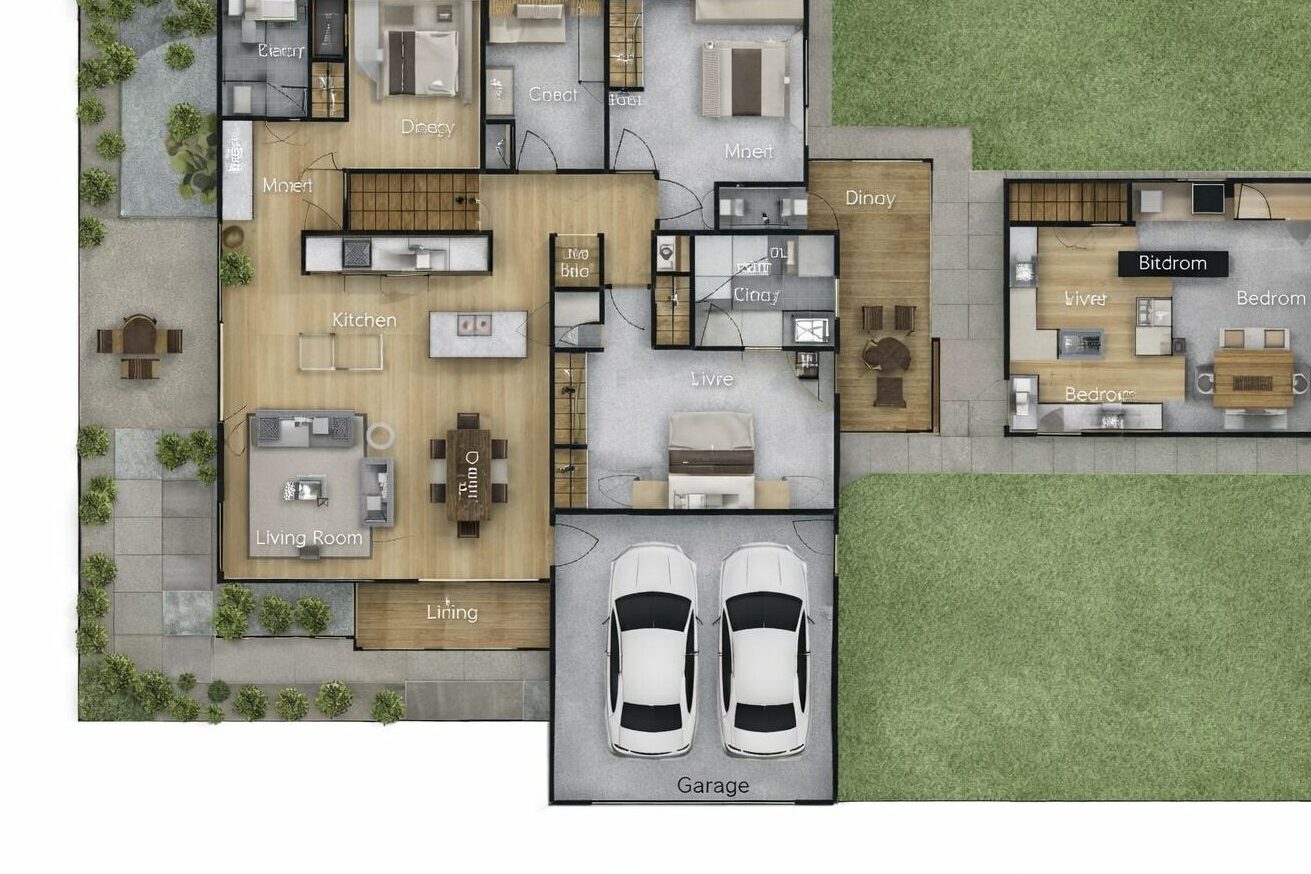
Two Homes on One Block, Is Your Property Sitting on Untapped Potential?
Dual occupancy is one of the smartest ways to use your land in Brisbane and the Redlands. Live in one, rent the other, or sell both. We handle everything from feasibility to handover.
If you’ve got a block over 600 square metres in Brisbane or the Redlands, there’s a good chance you could fit two homes on it. Dual occupancy lets you build two independent dwellings, each with their own entrance, kitchen, bathroom, and living areas, on a single title.
It’s popular with families who want to keep parents close, investors chasing dual rental income, and homeowners looking to offset their mortgage by renting out the second dwelling. Whatever the motivation, the key is getting the design and approvals right from the start.
We handle the full process, site feasibility, custom design, council approvals, and construction. One builder, one contract, one point of contact.
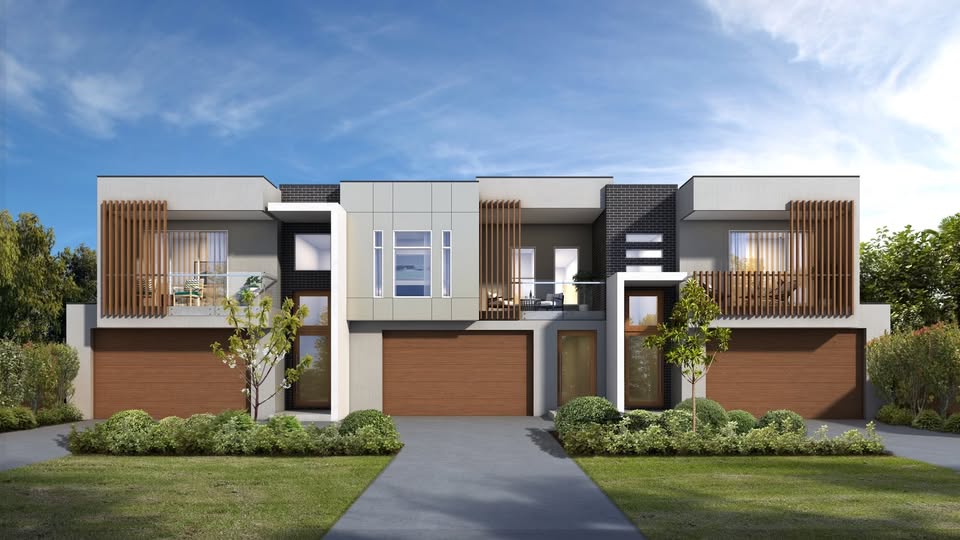
The 2026 Budget Changed the Rules for Property Investors
From 1 July 2027, negative gearing will only apply to new residential builds. Investors who purchase established properties after 12 May 2026 lose access to it entirely. Dual occupancy homes built from the ground up qualify under the new rules, meaning two rental incomes and retained negative gearing on a single block.
For investors sitting on a well-located Brisbane or Redlands block, or considering a knockdown where one dwelling becomes two, the case for building new is now stronger than it’s ever been. The window to get moving is shorter than most people realise, land to keys typically takes 18 months.
Talk to your accountant about what the changes mean for your situation. Talk to us about whether your block is a candidate.
Dual Occupancy vs Duplex, What’s the Difference?
People often use these terms interchangeably, but there’s a distinction:
- Dual occupancy: Two separate dwellings on one lot. They can be attached (like a duplex) or detached (a house at the front, a second home at the rear).
- Duplex: Specifically refers to two attached dwellings sharing a common wall.
Both options work well. We’ll recommend the best configuration based on your block, your goals, and the local council requirements.
What Is a Dual Occupancy Property?
A dual occupancy home refers to two fully self‑contained dwellings on the same lot. Common forms include:
- Duplexes: two homes attached side by side or one above the other
- Secondary dwellings or granny flats: a smaller detached home at the rear
- Custom dual living layouts: one larger home with a second self‑contained residence on the same site
Each dwelling has its own entry, kitchen and bathroom facilities. They function independently, which makes them suitable for rental, resale, in‑law living, or teenage accommodation.
Is Dual Occupancy Right for You?
Dual occupancy suits different people for different reasons across Cleveland, Thornlands, Victoria Point and the wider Redlands and Bayside Brisbane.
- Families: Keep parents or adult kids close by in their own independent home on the same block.
- Investors: Two rental incomes from one property. Strong demand across the Redlands for well-designed dual occ.
- Owner-occupiers: Live in the front home, rent the rear. Let the tenant help pay the mortgage.
- Downsizers: Build a smaller home for yourself and a larger one to sell or rent.
Can You Build a Dual Occupancy Home on Your Block?
The short answer is: it depends on your local planning scheme.
In Brisbane, the Brisbane City Plan 2014 governs zoning, overlays and development rules. In the Redlands, it’s the Redland City Plan. Both dictate what can be built and how.
Key factors include:
- Zoning: some zones allow dual occupancy, others limit development to single detached homes
- Overlays: flood, bushfire, character housing and noise overlays can affect design and approvals
- Site dimensions: frontage and area requirements may influence what is permissible
Determining whether your block is suitable starts with a feasibility and zoning review. Iconic Homes and Construction can connect you with expert town planners for this early assessment so you understand what’s possible before spending on design or construction.
Approvals and Planning: What Comes First
Town Planning vs Building Certification
Before any building or demolition happens, there are two approval tracks:
- Town Planning Approval: this determines whether your proposal can go ahead under planning rules. It considers zoning, overlays, neighbourhood character, and how your design responds to site conditions.
- Building Certification: once planning approval is granted, a private certifier checks your construction plans against the Building Code of Australia and Queensland Development Code, issues building approvals, conducts inspections, and signs off on final completion.
Some dual occupancy developments are code assessable, meaning they comply with defined standards and do not require public notification. Others, especially on constrained sites or those seeking variations from standard requirements, may be impact assessable and require more extensive documentation and consultation.
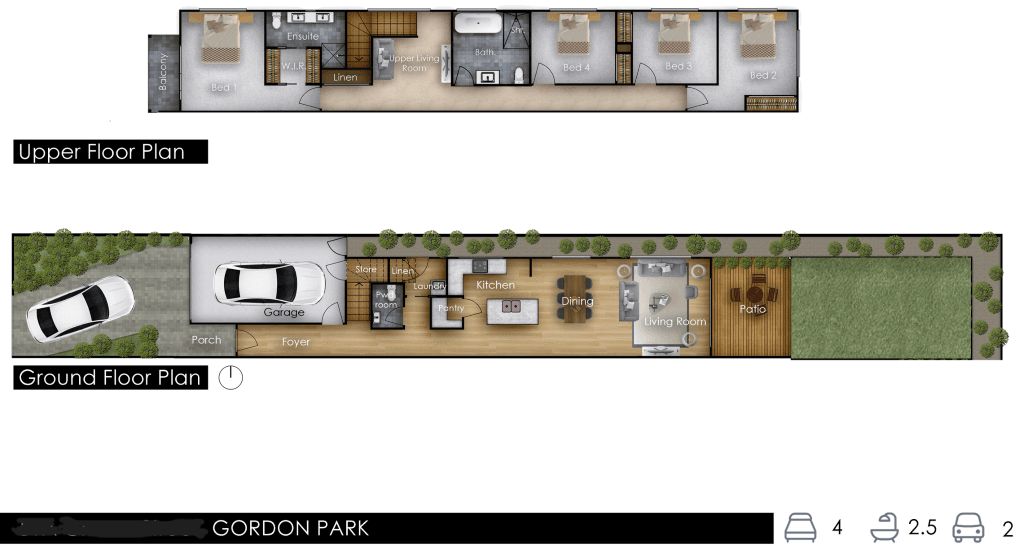
The Design, Consultants, and Reports You May Need
To support an approval, you may require:
- A survey and site analysis report
- Structural and civil engineering documentation
- Stormwater and flooding assessment
- Energy efficiency reports
- Acoustic separation details
- Bushfire or environmental reports depending on overlays
Iconic Homes and Construction helps coordinate the team, from surveyors to engineers, so your submission is strong and accurate.
Why Iconic Homes and Construction Is the Partner You Want
We’re QBCC licensed (Lic. 15141694), based in Cleveland, and experienced in dual occupancy builds across the Redlands and Brisbane. We know the zoning requirements, the council process, and how to design two homes that each feel like standalone houses, not afterthoughts.
FAQs About Dual Occupancy Home Builds
Does a dual occupancy new build qualify for negative gearing under the 2026 budget rules?
Yes. A dual occupancy built from the ground up qualifies as a new build under the 2026 Federal Budget rules and retains negative gearing from 1 July 2027. An established dual occupancy purchased after 12 May 2026 does not.
Does a knockdown rebuild qualify if I build dual occupancy?
Yes, if you knock down one dwelling and build two, that qualifies. One dwelling replaced by one dwelling does not.
Can I build dual occupancy on my block?
It depends on zoning, lot size, and council requirements. We offer free feasibility checks to assess your block before you spend money on plans.
Do I need to subdivide for dual occupancy?
Not necessarily. You can build two dwellings on one title without subdividing. If you want separate titles later, subdivision is an option but not a requirement.
How much does dual occupancy cost to build?
Every project is different. After the design phase, we provide a fixed-price contract so you know the exact cost before construction starts.
Can the two homes be different sizes?
Absolutely. Many clients build a larger primary home and a smaller secondary dwelling. We design each one based on your goals.
What’s the rental return on dual occupancy in the Redlands?
Returns vary by suburb and dwelling size, but dual occupancy properties in Cleveland, Thornlands, and Victoria Point are consistently in strong rental demand. We can connect you with a local property manager for specific yield estimates.
What Others Are Reading:


Our Services
Get A Quote
Get in touch today for a free, no-obligation quote on your building project.


